4 tipos de digital
Transformaciones
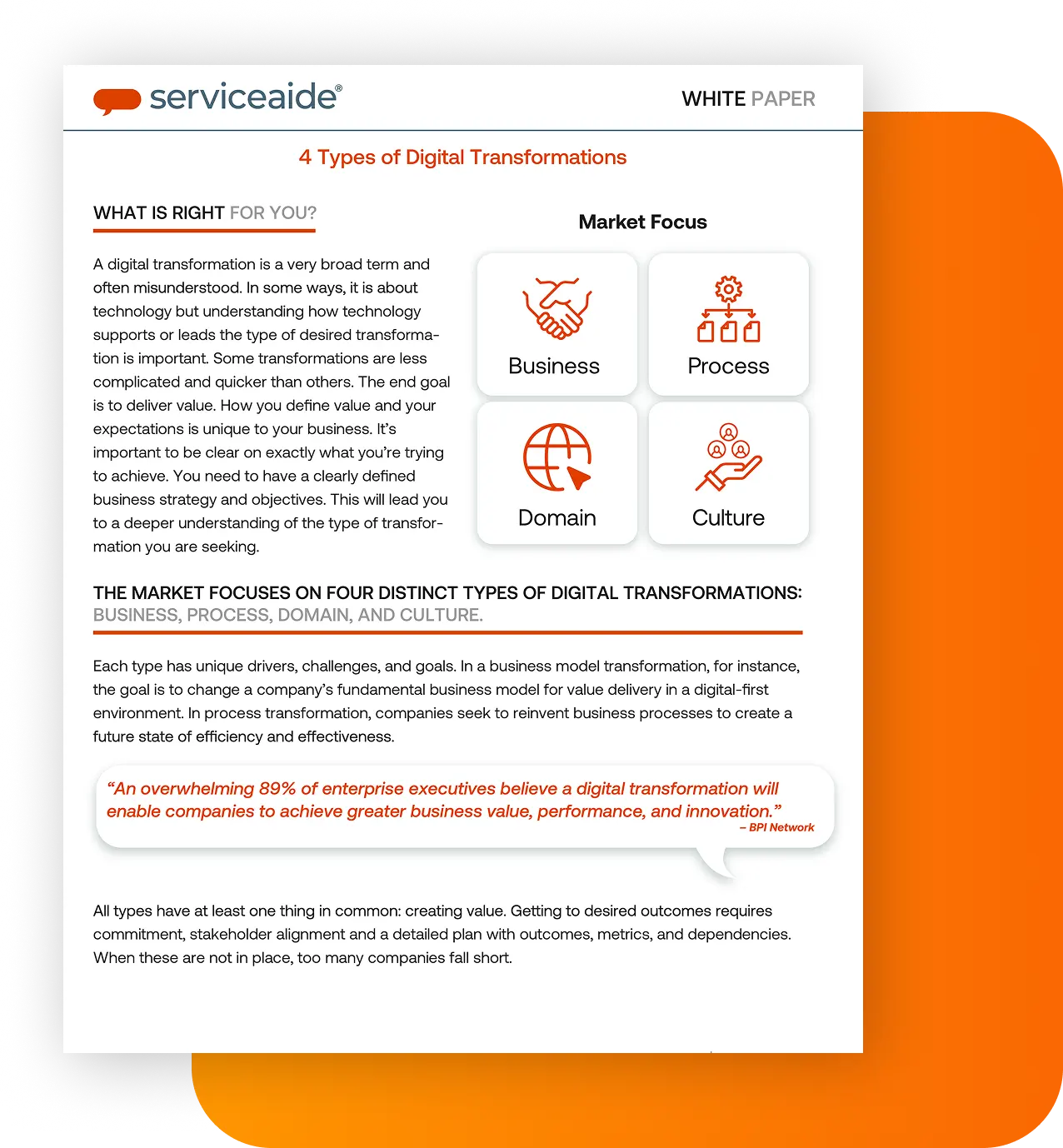

4 tipos de transformaciones digitales
¿QUÉ ES LO CORRECTO PARA TI?
La transformación digital es un término muy amplio y, a menudo, se malinterpreta. En cierto modo, tiene que ver con la tecnología, pero es importante comprender cómo la tecnología apoya o lidera el tipo de transformación deseada. Algunas transformaciones son menos complicadas y rápidas que otras. El objetivo final es ofrecer valor. La forma en que defina el valor y sus expectativas es exclusiva de su empresa. Es importante tener claro exactamente qué es lo que estás intentando lograr. Es necesario tener una estrategia y unos objetivos empresariales claramente definidos. Esto lo llevará a comprender mejor el tipo de transformación que busca.
Enfoque de mercado
Negocios
Proceso
Dominio
Cultura
EL MERCADO SE CENTRA EN CUATRO TIPOS DISTINTOS DE TRANSFORMACIONES DIGITALES:
NEGOCIO, PROCESO, DOMINIO Y CULTURA.
Cada tipo tiene impulsores, desafíos y objetivos únicos. En la transformación de un modelo de negocio, por ejemplo, el objetivo es cambiar el modelo empresarial fundamental de una empresa para ofrecer valor en un entorno en el que prima la digitalización. En la transformación de procesos, las empresas buscan reinventar los procesos empresariales para crear un estado futuro de eficiencia y eficacia.
«Un abrumador 89% de los ejecutivos empresariales cree que la transformación digital permitirá a las empresas lograr un mayor valor empresarial, rendimiento e innovación».
— Red BPI
Todos los tipos tienen al menos una cosa en común: crear valor. Llegar a los resultados deseados requiere compromiso, alineación de las partes interesadas y un plan detallado con resultados, métricas y dependencias. Cuando no existen, demasiadas empresas se quedan cortas.
1. LAS TRANSFORMACIONES DEL MODELO DE NEGOCIO ALTERAN LAS NORMAS EXISTENTES
La transformación empresarial tiene el potencial de revolucionar sectores enteros. Piense: Amazon comenzó vendiendo libros, luego tomó su infraestructura de TI (AWS) e inició la industria de la computación en nube. Accenture afirma que los beneficios de la transformación empresarial son «una mayor eficiencia, una mayor agilidad empresarial y, en última instancia, la liberación de un nuevo valor para los empleados, los clientes y los accionistas».
«El 87% de las empresas cree que la IA puede mejorar la eficiencia y la calidad del servicio y el soporte en su organización».
— Informe BPI Pulse
Con la transformación empresarial, la tecnología es un facilitador más que una prioridad. Una tecnología o una capacidad modernas pueden respaldar un modelo de negocio emergente. Tenga en cuenta cómo aprovechar las capacidades de la IA no solo para automatizar las funciones, sino también para predecir con audacia los cambios en el comportamiento de los clientes, los empleados y el mercado, podría afectar a su modelo empresarial.
La transformación empresarial cambia radicalmente el modelo empresarial y requiere una estrecha colaboración en toda la empresa. Suelen ser iniciativas estratégicas importantes que requieren presupuestos y tiempo significativos.
«9 de cada 10 líderes de nivel C y sénior afirman que sus organizaciones han llevado a cabo al menos una transformación digital a gran escala en los últimos dos años»
— McKinsey
2. LA TRANSFORMACIÓN DE PROCESOS APORTA VALOR
Con la transformación de los procesos digitales, las empresas automatizan y optimizan los procesos empresariales para generar una amplia variedad de beneficios. Piense: GE se embarcó en un viaje de transformación digital masivo, conocido como «GE Digital», para modernizar sus procesos empresariales y tecnológicos internos mediante el análisis de datos, el aprendizaje automático y el Internet industrial de las cosas (IIoT). Las transformaciones de los procesos pueden reducir los costos, mejorar la calidad, reducir las tareas manuales, mejorar los puntajes de satisfacción del soporte y mucho más.
Considere la posibilidad de transformar los procesos para mejorar y ampliar las capacidades de autoservicio en toda la organización. Quizás necesite mejorar la experiencia del usuario y acelerar los tiempos de respuesta. Un método para lograrlo es adoptar una tecnología que permita un cambio transformador en los procesos mediante un agente virtual basado en la inteligencia artificial que permita a los empleados obtener asistencia en tiempo real las 24 horas del día, en lugar de tener que llamar a un servicio de asistencia con personal. Con la incorporación de las capacidades de GenAI, los agentes inteligentes no solo pueden gestionar grandes volúmenes, sino que también pueden resumir y crear contenido para ayudar aún más a los usuarios finales a obtener la información que satisfaga sus necesidades. El valor añadido: un servicio de asistencia o un centro de atención al cliente que no necesitan seguir contratando mano de obra nueva, sino que pueden ampliar sus capacidades mediante soluciones tecnológicas que cuestan muchísimo menos.
Al igual que otros tipos, la transformación de procesos requiere un compromiso con el cambio.
«El coste de tramitar una solicitud de servicio es de 18 a 175$ y el coste de resolver un problema técnico es de 21 a 110$ en Norteamérica. Cuando hay un agente virtual disponible, el costo normalmente se reduce a entre 1 y 3 dólares si no es necesaria la intervención de un analista».
— Informe BPI Pulse
«El 21% de los responsables de la toma de decisiones de servicios globales que apoyan a sus organizaciones de DT citaron la implementación de nuevos procesos y capacidades como uno de sus mayores desafíos».
— Forrester
3. LA TRANSFORMACIÓN DE DOMINIOS REINVENTA LOS MERCADOS
La transformación de dominio se produce cuando una empresa decide entrar en un mercado adyacente aprovechando productos o servicios digitales innovadores. Piensa: Netflix solía enviar DVDs por correo, pero ahora hace streaming de películas y series en línea. Los altos ejecutivos que tienen los medios para reimaginar una nueva línea de negocios pueden aprovecharlas. ¿Eres uno de ellos?
«El 42% de las organizaciones considera que una cultura que bloquea y resiste el cambio digital puede obstaculizar en gran medida las iniciativas de transformación digital».
— Gartner
4. LA TRANSFORMACIÓN DE LA CULTURA REALIZA EL CAMBIO
En el centro de la transformación digital se encuentra un cambio en la mentalidad de los empleados: una transformación cultural. La transformación digital cambia lo que los empleados hacen a diario, a veces de manera espectacular, y la forma en que ven su valor. Piensa: Airbnb revolucionó el sector hotelero al transformar la cultura de sus empleados para fomentar una economía colaborativa y una plataforma impulsada por la comunidad. Estas iniciativas tienen éxito o fracasan en función de la capacidad de la empresa para gestionar el cambio cultural.
COMENZAR LA TRANSFORMACIÓN DE UN PROCESO DIGITAL
Si bien los CIO y el departamento de TI desempeñan un papel clave en cualquier transformación digital, normalmente inician e impulsan las transformaciones de los procesos digitales. En Serviceaide, nos centramos en ayudar a nuestros clientes a impulsar una variedad de transformaciones de procesos digitales. Nuestro equipo ha impulsado numerosas transformaciones de primer nivel, lo que nos llevó a desarrollar una cartera de productos que abarca la automatización, un agente virtual basado en la inteligencia artificial, la gestión del conocimiento y un conjunto integral de soluciones de gestión de servicios y soporte. Ahora, con nuestras soluciones de tercera generación basadas en GenAI y con más de dos décadas de experiencia en servicio y soporte, contamos con prácticas comprobadas y soluciones modernas.
El equipo de Serviceaide ha ayudado a miles de organizaciones a identificar soluciones para alcanzar sus objetivos empresariales. Identificamos los desafíos comunes y creamos un plan para superarlos. Estos pueden incluir:
Sistemas heredados: Los sistemas obsoletos pueden obstaculizar la transformación digital. Nuestros productos y métodos permiten automatizar los procesos y eliminar las barreras heredadas sin necesidad de reemplazarlas. Luego, las organizaciones pueden eliminar gradualmente los sistemas heredados o actualizarlos para minimizar las interrupciones y mejorar aún más.
Falta de experiencia: La escasez de talento calificado en tecnologías emergentes es un enorme desafío para la industria. Nuestra organización de servicios profesionales puede crear una receta para mejorar su estado actual, crear un plan de solución y capacitarlo en las técnicas y tecnologías más recientes para mejorar las operaciones mediante la automatización y GenAI.
Desafíos de integración: La integración suele ser la principal barrera para el cambio, y sus procesos, que son los más importantes para lograr resultados transformadores, tienden a ser los más complejos. Empleamos técnicas de minería de procesos y soluciones basadas en API, y podemos trabajar con usted para superar los desafíos de integración.
Gestión del cambio: La transformación digital requiere cambios. Los cambios en los procesos y la tecnología también implican cambios en la forma en que las personas trabajan. La gestión del cambio durante la implementación de la transformación y después es la clave del éxito y de la creación de una empresa ágil que pueda mejorar continuamente. La gestión del cambio es tan importante que tenemos una solución perfecta para ello. Nuestra experiencia en la implementación de la gestión del cambio es amplia y abarca incluso los sectores más regulados, lo que garantiza que usted gestione los riesgos y el cumplimiento y pueda centrarse en la mejora continua.
Escalabilidad: Asegúrese de que las soluciones digitales sean escalables para adaptarse al crecimiento futuro y a las necesidades cambiantes. Nuestras soluciones las utilizan las empresas medianas y las empresas incluidas en la lista Fortune 500 para operaciones de misión crítica, por lo que podemos garantizar que pueda escalar a medida que aumentan la complejidad o las necesidades.
Medición del éxito: Toda transformación digital debe establecer rápidamente un conjunto claro de objetivos y resultados clave (OKR). El éxito del programa depende de la claridad de los objetivos y de la evaluación cuantitativa y el establecimiento de mediciones basadas en los KPI. Éstos establecen los argumentos comerciales del programa y muestran su retorno de la inversión (ROI), hacen un seguimiento del ROI y permiten introducir mejoras orientadas a los objetivos una vez implementados.
Tenemos experiencia en establecer OKR desde el principio y durante un programa de transformación, colaborando con los clientes para garantizar las mejores métricas para impulsar y demostrar el ROI y la generación de informes en todos los niveles de la empresa.
Si está interesado en obtener más información sobre cómo la transformación de los procesos digitales puede ayudar a su organización, póngase en contacto con nosotros hoy mismo.
ACERCA DE SERVICEAIDE
Serviceaide es líder en servicios y soporte modernos basados en IA. La visión de Serviceaide es transformar la gestión de servicios en TI, negocios y servicio al cliente. Serviceaide, que presta servicios a clientes de todo el mundo, aplica los avances en inteligencia artificial, aprendizaje automático y procesamiento del lenguaje natural para ofrecer mejores experiencias, ofrecer un autoservicio mejorado y empoderar a los propietarios de los servicios. Serviceaide transforma el servicio a través de las conversaciones laborales digitales, la automatización y el conocimiento.